Best Portable Solar Gear for Outdoor Use in 2026?

Time:2026-11-20 Author:Madeline
0%

Portable solar gear promises quieter campsites, lighter packing, and power beyond the trailhead. But a panel’s advertised wattage is not the same as dependable energy at camp. Clouds, tree cover, panel angle, and short winter days can all reduce output. Small details matter.

The International Energy Agency’s Renewables 2024 report recorded nearly 510 gigawatts of new renewable capacity worldwide in 2023, with solar providing roughly three-quarters of the additions. That growth shows how rapidly solar technology is expanding, but it does not guarantee that every portable panel suits outdoor use. A useful setup pairs realistic charging expectations with a battery sized for your devices. Think of a phone, headlamp, or camera battery at the end of a long day—not just a product label.

This guide explores how to choose portable solar equipment for outdoor use, from foldable panels to power stations and compact chargers. We’ll compare practical factors such as weight, capacity, ports, durability, and charging conditions. NREL’s photovoltaic research offers valuable context on solar performance, but field results still depend on placement and weather. I may be giving specifications too much credit; real trips are messier than product tests. A panel can look excellent on paper and struggle beneath pine branches. Choose for your route, power needs, and tolerance for waiting—not the biggest number on the box.
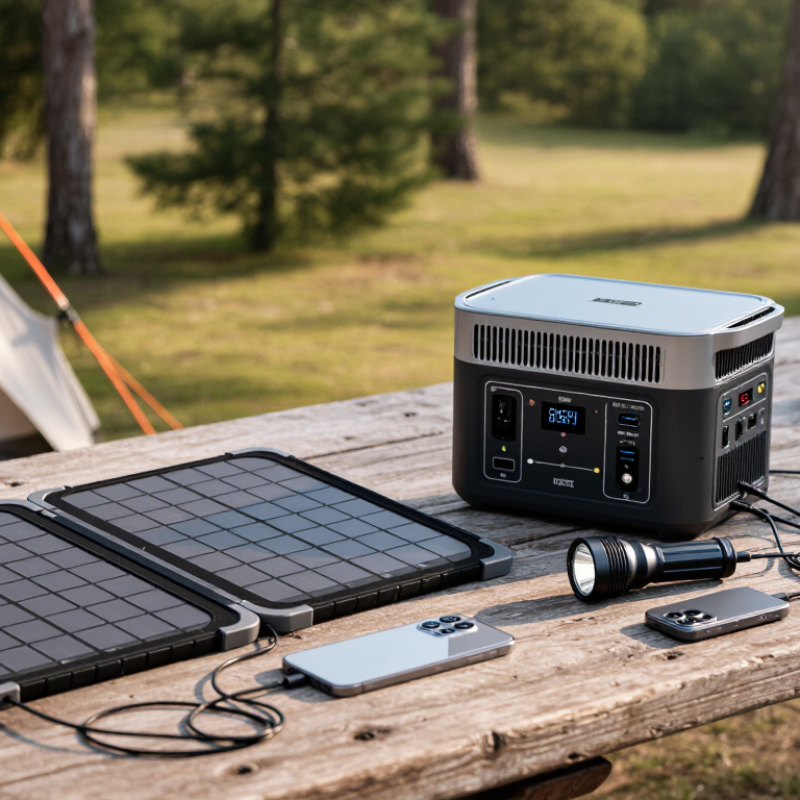
Best Portable Solar Gear for Outdoor Use in 2026?

Understanding Portable Solar Gear and How It Works

Portable solar gear turns sunlight into usable electricity through a simple chain. A panel captures light and produces direct current. A charge controller regulates that flow before it reaches a battery. The battery stores energy for later, while an inverter can convert it into household-style alternating current. Small devices often charge directly through USB, avoiding the inverter and wasting less energy.

Output depends on more than the panel’s advertised rating. Cloud cover, shade, panel angle, heat, and cable length all affect real-world charging. On a clear afternoon, positioning a folding panel toward the sun can help; shifting it every hour may help more. A phone may charge steadily, but larger equipment can test your patience. Useful, not magic. Check the battery capacity in watt-hours and compare it with your devices’ energy needs. Also confirm the ports and voltage match your equipment.

Tips: Keep panels unshaded, even by a tent strap. Use the shortest practical cable, and place the battery out of direct sun. Test your setup at home before relying on it outdoors. One detail is easy to miss: a panel may generate power without charging a device if its output fluctuates too much. A compatible battery or regulator can smooth the process.

Identifying Outdoor Power Needs and Usage Conditions

Before choosing portable solar gear, list what you will actually power outdoors. A phone may need only a small top-up, while a camera, lantern, or compact cooler can draw power for hours. Check each device’s wattage and estimate its daily use. Add the totals in watt-hours, then allow extra capacity for charging losses and unexpected use. These estimates are imperfect; people often forget cables, cold-weather battery limits, or a second night away.

Conditions matter as much as capacity. A panel that works well in an open campsite may produce little under trees or beside a shaded tent. Shade changes everything. Note the likely sun hours, season, and whether you can reposition the panel during the day. On a bright afternoon, a south-facing setup may help, but clouds and low winter sun still reduce output. Keep power equipment dry, ventilated, and out of direct heat where possible. Think about carrying distance, too: a heavier power station can feel manageable beside a car and awkward on a long trail. It is easy to plan around a perfect sunny day. A more reliable choice matches your real route, device list, and tolerance for running short.

Comparing Portable Solar Panels, Power Stations, and Chargers

Portable solar panels, power stations, and solar chargers solve different problems outdoors. A panel collects energy; it does not store it. Its output can drop when clouds pass, the panel sits at an angle, or shade crosses one corner. A foldable panel suits a campsite where you can leave it in sunlight for hours. Check its rated output and the station’s input limit before pairing them.

A power station stores electricity for later use. It can run several devices, but its capacity and output limits matter more than its size alone. A small model may recharge a phone many times, yet struggle with a high-wattage appliance. Read the watt-hour rating, port details, and recharge time. I still tend to underestimate how quickly a laptop drains a battery on a cold evening.

Solar chargers are lighter and simpler. Many connect directly to a phone, though variable sunlight can make charging slow or intermittent. They work best for low-demand devices and short trips, not as a dependable replacement for a larger battery. Keep cables out of puddles and avoid leaving electronics in direct heat. Small gear. Real limits. Test the setup at home before relying on it miles from an outlet.

Evaluating Key Features for Outdoor Performance in 2026

For outdoor use in 2026, judge portable solar gear by how it performs at camp, not only by its rated output. A panel’s wattage is measured under favorable conditions; shade, cloud cover, and a low sun angle can cut real-world charging. Look for a stable stand, adjustable tilt, and clear output readings. Small details matter. A loose connector or short cable can make a sunny lunch break less useful. Check whether the panel pairs with your power station, and confirm its input limits before buying.

Tips: Test the setup at home. Check the fine print. Carry a compatible cable, keep connectors dry, and avoid placing panels where passing hikers might trip over them. A little shade from a tree can slow charging more than expected.

For a battery, compare usable capacity, weight, recharge time, and temperature limits. A compact unit may suit a day hike, while longer trips call for more stored energy or a way to recharge on the move. Weather resistance is useful, but it does not mean equipment can be left in heavy rain. I would also check how clearly the manual explains safe operation. Specifications are helpful, though they cannot predict every campsite. A cloudy afternoon can still change the plan.

Choosing and Using a Portable Solar Setup Safely

Best Portable Solar Gear for Outdoor Use in 2026?

Choosing and Using a Portable Solar Setup Safely

A safe portable solar setup starts with matching the panel, cables, and battery to their rated limits. Check the equipment manuals before connecting anything, especially if combining separate components. Place panels on stable ground, angled toward direct sun, and secure them against gusts. Keep the battery in a dry, shaded, well-ventilated spot, away from hot surfaces and standing water. Solar output changes with clouds, shade, and panel angle, so avoid relying on one sunny-hour estimate for essential power. It is easy to overlook a small connector until it becomes the weak point.

Tips: Inspect cables for cuts or loose fittings before each trip. Keep connections dry, avoid overloaded outlets, and unplug equipment before adjusting wiring. Give the battery room to breathe. If a cable feels unusually hot, disconnect the system and check its ratings and connections. Start with a low-power device, such as a phone charger, and watch how the setup behaves. A little extra caution can feel fussy, but guessing about electrical limits is worse.

Best Portable Solar Gear for Outdoor Use in 2026? - Choosing and Using a Portable Solar Setup Safely

Gear type Typical rating or capacity Approximate packed weight Good for Practical guidance Safety check
Compact folding solar panel 40–60 W About 2–4 kg (4–9 lb) Day hikes, small devices, and topping up a small power station Under favorable conditions, roughly 110–170 Wh per day with 4 peak-sun hours and an assumed 70% system yield. Use a compatible regulated USB output or charge controller; keep connectors dry.
Mid-size folding solar panel 100–120 W About 4–7 kg (9–15 lb) Car camping and charging a small-to-medium power station A useful balance of packability and charging speed; output falls with shade, cloud, and poor panel angle. Check the panel’s open-circuit voltage and operating current against the power station’s solar-input limits.
Large folding solar panel 200–220 W About 7–12 kg (15–26 lb) Base camps and recharging larger power stations With 4 peak-sun hours and an assumed 70% system yield, estimated daily energy is about 560–616 Wh in favorable conditions. Secure the panel against wind and avoid connecting panels in a configuration that exceeds the input limits.
Portable power station About 300–600 Wh capacity Often about 4–8 kg (9–18 lb) Storing solar energy and powering USB devices or modest AC loads Choose capacity based on the devices’ energy use in watt-hours, not just their rated watts. Follow the operating-temperature and charging instructions; keep the unit ventilated and out of direct heat.
Higher-capacity portable power station About 600–1,000 Wh capacity Often about 7–12 kg (15–26 lb) Longer trips and several small appliances, subject to inverter limits A larger battery stores more energy but may take longer to recharge; compare its solar-input limit with the panel array. Do not exceed the rated input voltage, current, or power, and use only compatible cables and connectors.
Solar charge controller Select by panel voltage/current and battery specifications Varies by model Charging a separate battery from a panel that does not include suitable regulation A controller is not automatically needed when a power station already has a solar charge controller built in. Match the controller to the battery chemistry and follow the specified connection sequence and fuse requirements.

Estimates are illustrative, not guaranteed: actual solar production varies with location, season, weather, shading, panel orientation, and conversion losses. Keep equipment dry unless it is specifically rated for wet conditions, inspect cables for damage, and never leave a charging power station in a hot, enclosed vehicle.

FAQS

How does portable solar gear produce electricity?

A panel turns sunlight into direct current. A controller regulates the flow, and a battery stores energy. An inverter can provide household-style alternating current.

Why can real-world panel output be lower than expected?

Clouds, shade, heat, panel angle, and long cables can reduce output. Even a tent strap may shade one corner. Small changes matter.

Does a portable solar panel store electricity?

No. It collects energy, while a battery or power station stores it for later. Without storage, changing sunlight can interrupt charging.

What should I check before pairing a panel with a power station?

Compare the panel’s rated output with the station’s input limit. Check the ports too. A mismatch can waste a sunny afternoon.

How do I estimate whether a battery can run my devices?

Check its capacity in watt-hours and compare that figure with your devices’ energy needs. A laptop can drain a battery faster than expected. I still misjudge this sometimes.

Are solar chargers suitable for phones?

They can charge phones directly, but variable sunlight may make charging slow or intermittent. Better for low-demand devices and short trips.

How can I improve charging outdoors?

Keep the panel unshaded, point it toward the sun, and use the shortest practical cable. Repositioning it every hour may help. Not always.

What should I test before taking solar gear on a trip?

Test the full setup at home, including cables, ports, and charging behavior. Keep the battery out of direct sun and cables away from puddles. Tiny details count.

Conclusion

Portable solar gear turns sunlight into usable electricity through panels, which can charge devices directly or store energy in a power station for later use. The right setup depends on what you plan to power, how long you’ll be outdoors, available sunlight, weather, and how easily you need to carry your equipment. Small chargers may suit phones and other low-power devices, while larger panels and power stations can support several devices or higher energy needs.

When comparing options, consider capacity, output, charging speed, weight, portability, durability, and compatibility with your devices. For those wondering how to choose portable solar equipment for outdoor use, start by estimating your daily energy needs and matching them to the conditions of your trip. Use equipment according to its instructions, keep electrical connections dry, position panels securely in good sunlight, and allow for changing weather and reduced charging efficiency. A carefully matched setup can provide practical, dependable power while helping you stay prepared outdoors.

Madeline

Madeline

Madeline is a dedicated marketing professional with a wealth of expertise in our company's core offerings. With a keen understanding of the industry, she brings a unique perspective to her role, consistently delivering high-quality content that highlights the superior aspects of our products. As......