As the demand for renewable energy expands, many homeowners consider solar systems. A common question arises: what is the difference between off grid and hybrid solar systems? Recent industry reports indicate that the global solar market is projected to reach $223 billion by 2026, reflecting a significant shift towards sustainable energy solutions.
Off grid solar systems operate independently from the utility grid. They require battery storage to supply power during the night or cloudy days. In contrast, hybrid systems combine grid connectivity with battery storage. This allows users to draw from both sources, providing greater flexibility and reliability. According to the U.S. Department of Energy, hybrid systems can lead to energy savings of up to 60%.
Understanding these differences is crucial for homeowners. Each system comes with unique benefits and challenges. Off grid solutions may offer complete independence but can be costly to install. Hybrid systems might be more sustainable and economical, yet they rely on grid availability. Exploring these options can lead to informed decisions tailored to individual energy needs.
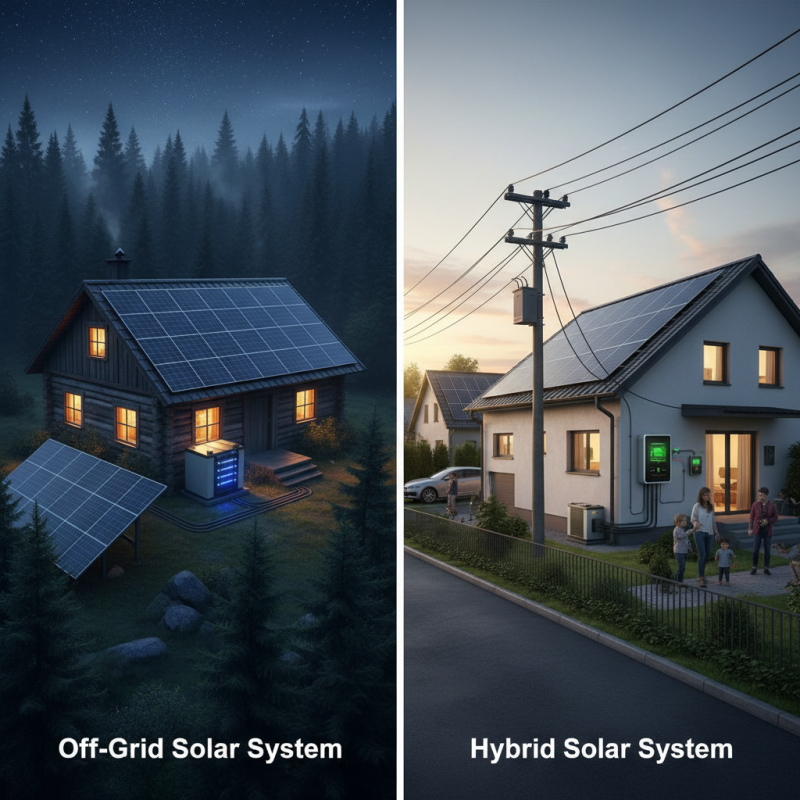
Off-grid solar systems operate independently of traditional power grids. They rely entirely on solar energy, making them ideal for remote locations. Users typically install solar panels, batteries, and inverters to create their own energy source. This setup provides a reliable solution for those looking to reduce reliance on conventional electricity. However, the initial investment can be high, and maintenance requires a basic understanding of solar technology.
An off-grid system also poses challenges. It relies on battery storage, which may need replacement every few years. Users must monitor energy consumption closely to avoid shortages. Limited sunlight during certain seasons can affect power generation. In some cases, this may lead to inconvenient outages. Despite these challenges, off-grid systems offer a level of freedom and sustainability that is increasingly appealing to environmentally conscious homeowners. They encourage self-sufficiency and promote an understanding of energy usage.
| Feature | Off Grid Solar Systems | Hybrid Solar Systems |
|---|---|---|
| Power Source | 100% reliant on solar power and battery storage | Combines solar with grid electricity or generator backup |
| Utility Connection | No utility connection | Can be connected to utility grid |
| Battery Requirement | Essential for storing solar energy | Optional, can use grid for backup |
| Installation Cost | Typically higher due to full independence | Generally lower, with flexible options |
| Reliability | Dependent on battery capacity and sunlight | More reliable with access to grid power |
| Use Case | Ideal for remote locations | Suitable for urban settings |
| Control Over Energy | Complete control | Moderate control, depending on grid access |
| Maintenance | Requires regular battery checks | Less intensive, dependent on the grid |
| Environmental Impact | Usually minimal, highly sustainable | Can vary based on grid energy mix |
| Energy Storage | Critical for energy availability | Less critical, but beneficial |
: Off-grid systems often have higher upfront costs due to larger solar arrays and battery storage. Maintenance can also add ongoing expenses.
Hybrid systems initially seem more affordable with lower installation costs. They require less battery capacity compared to off-grid options.
Off-grid systems significantly reduce carbon emissions by relying solely on solar energy and using battery storage for availability.
Yes, hybrid systems may have higher emissions due to their reliance on traditional energy sources. This can increase their carbon footprint.
Off-grid systems provide full independence from the grid, while hybrid systems can create reliance on traditional energy sources, feeling tied to them.
Users need to manage regular maintenance on batteries and systems, which can be complex and costly.
Yes, long-term reliance on the grid in hybrid systems may lead to changing electricity costs that can be unpredictable.
The choice should consider financial implications, environmental goals, and how much users want to rely on renewable energy.
Yes, by reducing dependence on fossil fuels and promoting renewables, off-grid systems help conserve natural resources.
They need to weigh the upfront costs, maintenance, environmental impacts, and their commitment to sustainability in their choice.
The article titled "Top 10 Differences Between Off Grid and Hybrid Solar Systems" explores the fundamental distinctions between these two solar energy solutions. Off grid solar systems operate independently from the utility grid, relying solely on solar panels and battery storage, making them ideal for remote areas. In contrast, hybrid solar systems combine solar energy with traditional grid power, allowing users to switch between the two based on availability and cost-effectiveness.
One of the key differences highlighted is energy storage, as off grid systems require robust battery solutions to ensure a continuous supply of power, while hybrid systems can rely on the grid for backup. Additionally, cost comparisons reveal that off grid setups generally entail higher initial investment due to the need for extensive battery systems. The environmental impact of both systems is examined, showcasing how each contributes to sustainable energy, but with varying levels of efficiency and dependency on non-renewable sources. Overall, understanding what is the difference between off grid and hybrid solar systems is crucial for consumers looking to make informed energy choices.

 PlugVolt Charging