Choosing the right solar system begins with a clear picture of household energy use. Many homeowners start with roof size or panel price. That approach can create costly mistakes. The better question is how to calculate solar energy needs for a household using real consumption data.
Energy-efficiency expert Amory Lovins is widely credited with saying, “The cheapest energy is the energy you don’t use.” This idea matters in every home, including properties considering China-made solar panels. Begin with twelve months of electricity bills. Record monthly kilowatt-hours, then identify seasonal changes. Air conditioners may dominate summer demand. Water heaters and electric heating can reshape winter consumption.
Walk through the home with a simple checklist. Note each appliance’s wattage, daily operating hours, and estimated monthly use. A refrigerator runs differently from a kettle. A pump may start suddenly and create a high peak load. These details affect inverter selection, not only panel quantity. Divide annual usage by twelve for an initial monthly average. Then compare that figure with local sunlight hours, roof direction, shading, and expected system losses.
The result will not be perfectly precise. It should not be. Family habits change, guests visit, and appliances age. Leave a reasonable reserve instead of designing for an imagined perfect month. A qualified installer can verify the calculation with site measurements and regional solar data. That review adds practical confidence before purchasing equipment. The goal is a balanced system that produces enough energy, avoids unnecessary oversizing, and remains useful through changing household needs.
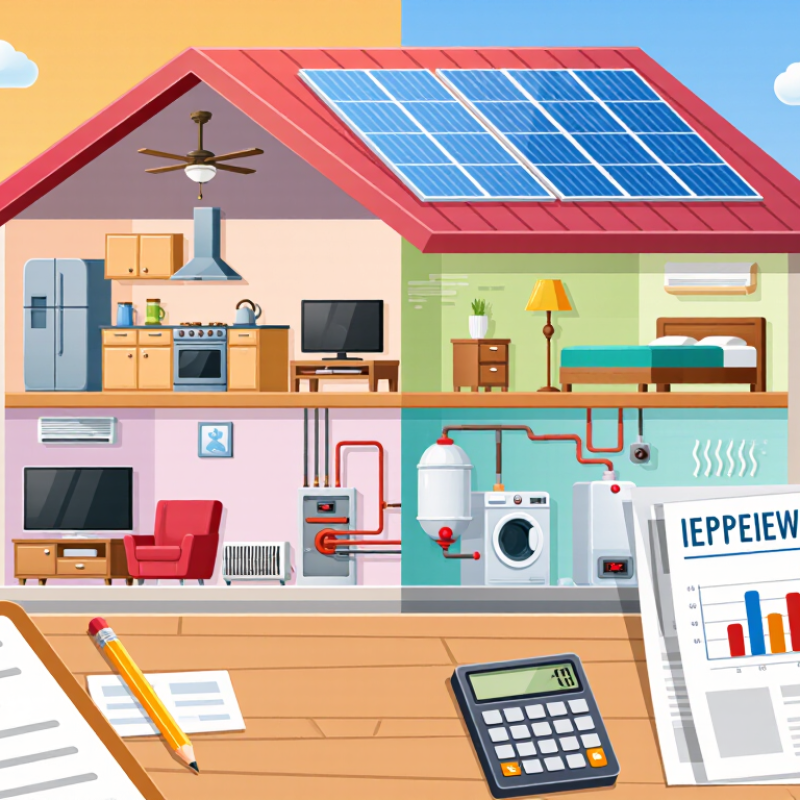
Planning a home solar system starts with an honest appliance inventory. Walk through every room and record each device, its rated watts, and its daily operating hours. Check the label near the plug, motor, or rear panel. Do not rely only on memory. It often misses small loads.
List refrigerators, freezers, lights, televisions, computers, routers, pumps, fans, washing machines, and cooking equipment. Note appliances that run continuously, such as a router or refrigerator. Then identify occasional loads, including a kettle, vacuum cleaner, or hair dryer. Their power ratings may be high, even when their use lasts only ten minutes. Short use still matters.
Use this simple calculation: watts multiplied by hours equals watt-hours. A 100-watt freezer running for eight hours uses about 800 watt-hours. Motors also need extra starting power. A pump rated at 750 watts may briefly require much more during startup. Record that surge requirement separately. Heating appliances deserve careful attention. A 2,000-watt heater can consume substantial energy quickly.
Real measurements are better. A plug-in energy meter can reveal cycling patterns and standby consumption. Compare its reading with the nameplate rating. They may not match. That difference is useful, not a mistake. Keep a seven-day log, because one unusually cold or busy day can distort the estimate. Include future equipment, but avoid guessing excessively. A qualified solar professional should review the final load list, inverter capacity, battery needs, and local electrical requirements.
Identify household appliances, record their rated power, estimate daily operating hours, and calculate daily energy consumption. The chart compares typical appliance power ratings in watts.
Calculation method: Daily energy use (kWh) = Power rating (W) × Operating time (hours) ÷ 1,000. Actual consumption varies according to appliance efficiency, settings, and usage patterns.
China Best Solar: How to Calculate Home Energy Needs
Measure Daily Usage Time for Each Appliance
Accurate solar planning starts with an honest record of household routines. Write down every appliance, its rated wattage, and daily operating time. Check the label behind the refrigerator or beneath the microwave. Small details matter.
Use this simple calculation: watts multiplied by hours, divided by 1,000, equals daily kilowatt-hours. A 100-watt fan running for six hours uses 0.6 kilowatt-hours. Record lighting room by room, because one lamp may run longer than expected. Include televisions, routers, water pumps, cooking equipment, and charging devices.
Do not estimate from memory alone. My first household record missed a heater used briefly each morning. That mistake changed the daily total noticeably. Track appliance use for at least three typical days. Note weekend habits separately. Refrigerators cycle automatically, so their rated wattage does not equal constant consumption. For better accuracy, compare your calculation with the electricity meter reading.
Add standby consumption from devices that remain plugged in overnight. Computers, internet equipment, and entertainment systems can quietly use power. Also consider seasonal changes, such as longer cooling periods in summer. A professional installer can review these figures and account for inverter losses, battery efficiency, and cloudy-day reserves. Leave a small allowance, but avoid adding an unrealistic buffer. Overestimating may increase system cost without improving practical reliability.
Example daily household energy assessment based on average appliance power, estimated daily operating time, and the formula: Daily Energy (kWh) = Average Power (kW) × Usage Time (hours)
| Appliance or Load | Quantity | Average Power per Unit (W) | Daily Usage Time per Unit (h) | Daily Energy Use (kWh) | Share of Daily Use | Monthly Energy Use (kWh) |
|---|---|---|---|---|---|---|
| Refrigerator | 1 | 120 | 24.0 | 2.88 | 28.9% | 86.40 |
| LED lighting | 10 | 9 | 5.0 | 0.45 | 4.5% | 13.50 |
| Television | 1 | 100 | 4.0 | 0.40 | 4.0% | 12.00 |
| Wi-Fi router and network equipment | 1 | 15 | 24.0 | 0.36 | 3.6% | 10.80 |
| Laptop computer | 2 | 60 | 6.0 | 0.72 | 7.2% | 21.60 |
| Washing machine | 1 | 500 | 0.5 | 0.25 | 2.5% | 7.50 |
| Microwave oven | 1 | 1,200 | 0.3 | 0.36 | 3.6% | 10.80 |
| Electric kettle | 1 | 1,500 | 0.3 | 0.45 | 4.5% | 13.50 |
| Induction cooktop | 1 | 1,800 | 1.0 | 1.80 | 18.0% | 54.00 |
| Air conditioner | 1 | 1,000 | 3.0 | 3.00 | 30.1% | 90.00 |
| Ceiling or standing fan | 2 | 50 | 6.0 | 0.60 | 6.0% | 18.00 |
| Standby and miscellaneous loads | 1 | 80 | 4.0 | 0.32 | 3.2% | 9.60 |
| Estimated Household Total | 11.59 | 100.0% | 347.70 | |||
| Planning note: A solar system should normally include additional capacity for inverter losses, battery charging losses, seasonal weather changes, future appliances, and occasional peak loads. Actual consumption varies with appliance efficiency, thermostat cycling, household size, climate, and user behavior. | ||||||
A reliable solar design begins with measured household energy use, not a guessed panel count. Record each appliance’s wattage and daily operating hours, then use this formula: watts × hours ÷ 1,000 = daily kilowatt-hours A 100-watt refrigerator running for eight equivalent hours uses 0.8 kWh. Repeat this calculation for lighting, cooling, water heating, cooking, electronics, and pumps. Include standby loads.
Small loads matter.
Add every appliance’s daily use to estimate total daily consumption. Multiply that figure by 30.4 to estimate monthly consumption. For example, a home using 18 kWh daily requires about 547 kWh monthly. Compare this result with utility bills from the previous 12 months. The U.S. Energy Information Administration reported average residential electricity consumption of about 893 kWh per month in its Residential Energy Consumption Survey. That equals roughly 29.5 kWh per day, but local homes can differ sharply.
Solar sizing should also account for inverter, wiring, battery, temperature, and dust losses. A National Renewable Energy Laboratory benchmark commonly models approximately 14% system losses in photovoltaic estimates. Therefore, a home needing 18 kWh daily may require around 20.9 kWh of solar production before weather variability. Use the least sunny month for a more dependable design. My field calculations often reveal overlooked devices, especially water heaters and outdoor equipment. Recheck assumptions after one month of monitoring. Estimates are useful, but they are not perfect.
China Best Solar: How to Calculate Home Energy Needs?
Solar planning should reflect more than today’s electricity bill. Review at least twelve months of utility records, including winter heating and summer cooling. Note each month’s kilowatt-hour use, then identify the highest demand period. A home using 700 kWh in July may need less in mild spring, but the system must handle seasonal peaks. Check sunlight changes, shading from trees, and shorter winter days. These details can alter production significantly.
Future electricity needs deserve careful attention. An electric vehicle, heat pump, larger freezer, or home office can increase annual consumption. Estimate each planned appliance’s wattage and daily operating hours. Add a realistic growth allowance, often between 10 and 20 percent. However, adding too much capacity may increase costs without improving practical performance. I have seen homeowners overestimate future demand, then discover their assumptions were too optimistic. Recheck them against household habits.
Tips: Compare monthly usage, not only the annual total. Measure high-use appliances with a plug-in meter when possible. Ask a qualified solar professional to review roof orientation, local weather data, backup goals, and electrical limits. Leave room for uncertainty. Seasonal needs change. Revisit the calculation yearly, especially after renovations or new appliances.
China Best Solar: How to Calculate Home Energy Needs
Estimate solar production from measured consumption, not guesswork. The U.S. Energy Information Administration reported average household use of about 886 kWh monthly in its Residential Energy Consumption Survey. That equals roughly 29.5 kWh daily, but regional habits vary widely. Measure real usage. Review twelve months of utility bills, then separate essential loads, such as refrigeration, lighting, internet equipment, and water pumping.
Solar array sizing uses this practical formula: daily energy ÷ peak sun hours ÷ system efficiency. For a home using 29.5 kWh daily, with 4.5 peak-sun hours and 80% total efficiency, the estimate is about 8.2 kW. The National Renewable Energy Laboratory’s PVWatts guidance highlights shading, temperature, wiring, and inverter losses. These details matter. A roof facing away from the best solar direction may need more capacity. Weather matters too.
Battery capacity should cover essential loads, not every appliance automatically. If essential demand reaches 12 kWh daily, a 1.5-day backup requires about 21 kWh nominal storage. This calculation allows 90% usable depth of discharge and 95% battery-system efficiency. The International Energy Agency reports that solar output is variable, so storage planning must consider seasonal weather and outage length. That estimate is imperfect. Actual design should include local solar data, starting currents, future loads, and safety requirements. A qualified installer should verify cable sizing, ventilation, protection devices, and local electrical compliance before installation.
Record refrigerators, freezers, lights, televisions, computers, routers, pumps, fans, and cooking equipment. Include occasional loads, such as kettles, vacuum cleaners, and hair dryers. Small standby loads still matter. Check labels near plugs, motors, or rear panels. Memory misses devices.
Multiply watts by operating hours, then divide by 1,000. A 100-watt freezer running eight hours uses about 0.8 kilowatt-hours daily. Repeat this calculation for every appliance. Use measured hours when possible, because estimates can be wrong.
Motors may need extra power when starting. A 750-watt pump can briefly demand much more electricity. Record its running rating and startup requirement separately. This helps size the inverter correctly.
Add each appliance’s daily kilowatt-hours for a daily total. Multiply the daily total by 30.4 for an estimated monthly figure. For example, 18 daily kilowatt-hours equals about 547 monthly kilowatt-hours. Compare this estimate with twelve months of utility bills. The numbers may not match.
Yes. Include routers, televisions, chargers, and other devices that remain connected. A plug-in energy meter can reveal hidden standby use. It may also show cycling patterns from refrigerators or freezers. A label rating is useful, but it is not always the real reading.
Account for inverter, wiring, battery, temperature, and dust losses. A common planning estimate uses about 14 percent total system loss. If a home needs 18 daily kilowatt-hours, production may need to reach roughly 20.9 kilowatt-hours. Weather can still reduce output. The estimate is imperfect.
Review at least twelve months of electricity records. Compare winter heating, summer cooling, and mild-season usage. A home using 700 kilowatt-hours in July may need less during spring. Check tree shade, roof direction, and shorter winter daylight. Winter often exposes weak assumptions.
List planned equipment, such as an electric vehicle, heat pump, freezer, or home office. Estimate each item’s wattage and daily operating hours. Adding a realistic 10 to 20 percent allowance can provide flexibility. Avoid adding excessive capacity without evidence. Recheck the plan after one year.
Learning how to calculate solar energy needs for a household begins with creating a complete list of appliances, including lights, refrigerators, air conditioners, water heaters, and electronic devices. Record each appliance’s power rating in watts and estimate how many hours it operates each day. Multiply power by daily operating time to determine its energy use, then add the results to calculate total daily consumption. Monthly needs can be estimated by multiplying the daily total by the number of days in the month.
For a more reliable estimate, consider seasonal changes, such as higher cooling demand in summer or increased lighting use in winter. It is also wise to include expected future needs, such as new appliances or changes in household size. After determining total energy consumption, account for sunlight availability and system losses when estimating solar panel capacity. Battery capacity should be sized according to nighttime usage, backup goals, and the number of days of energy storage required.

PlugVolt Charging