What is the lifespan of residential lithium batteries? For many homeowners, the practical answer is roughly 10 to 15 years, but that range is not a guarantee. Battery chemistry, daily usage, temperature, and charging habits all affect how quickly capacity declines. A battery mounted in a hot garage and cycled heavily may age differently from one used gently in a cool utility room. It varies.
Battery scientist Dr. Jeff Dahn’s research supports this careful paraphrase: operating conditions strongly influence battery aging. That is more useful than treating a quoted lifespan as a countdown. Check the manufacturer’s warranty for its term, expected energy throughput, and minimum capacity guarantee; these details can help set realistic expectations. A warranty, however, is not a promise that the battery will perform like new until its final day.
This guide explains how lithium-ion home batteries age, what “end of life” usually means, and which everyday conditions can shorten or extend service. It also distinguishes calendar life from cycle life, since a battery can lose capacity over time even when it is not used every day. Not forever. Real homes have uneven seasons, changing energy needs, and imperfect settings. Those factors make one universal lifespan misleading. The goal is not to predict an exact replacement date, but to understand the signs of aging and compare a battery’s expected service life with its warranty and household use.
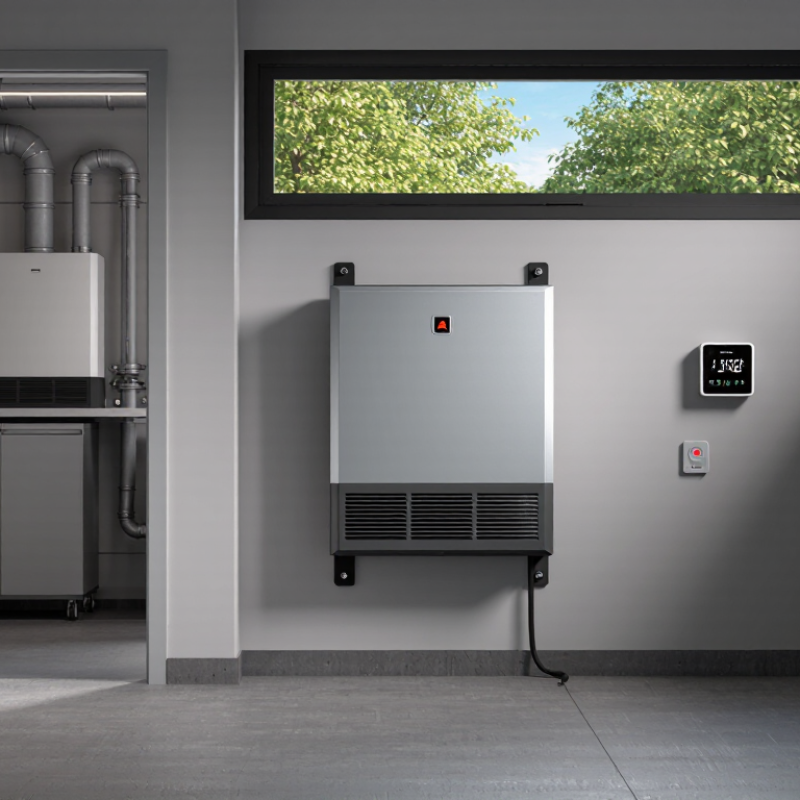
A residential lithium battery stores electricity as chemical energy inside its cells. During charging, lithium ions move through an electrolyte between electrodes, while electrons travel through an external circuit. That separation is the key. When a home needs power, the process reverses. An inverter converts the battery’s direct current into the alternating current used by household appliances. Lights, a refrigerator, or selected circuits can then draw energy from the system. A battery management system monitors voltage, temperature, and current, and may limit charging or output when conditions approach safe operating ranges.
The system does not create energy. It shifts it in time. Solar electricity collected at noon, for example, can be stored for use after sunset, depending on capacity and system settings. Repeated charging and discharging gradually reduce usable capacity; high temperatures and frequent deep discharges can speed that wear. So lifespan is not just a calendar number. It depends on cell chemistry, temperature, cycling habits, and reserve settings. A cycle estimate is useful, but not a promise; household loads rarely match neat test conditions. A cool, shaded installation can help, though real homes are rarely perfect.
| Topic | Typical figures or process | What it means for a home |
|---|---|---|
| Expected service life | Many residential lithium-ion battery systems are designed for roughly 10–15 years of service. Actual life varies by battery chemistry, operating conditions, and product limits. | A battery may remain operational beyond its warranty period, but its available capacity can decline with age and use. |
| Cycle life | Cycle-life ratings are product-specific. Many residential systems are rated for several thousand cycles, with the rating tied to stated test conditions and a specified remaining-capacity threshold. | A cycle represents energy use equivalent to a full charge and discharge; several partial cycles can add up to one full equivalent cycle. |
| Capacity retention | Warranty documents commonly specify a minimum remaining capacity or an energy-throughput limit at the end of the warranty term. The exact figure and conditions differ by product. | Compare the warranty’s capacity-retention and throughput terms rather than assuming every battery degrades at the same rate. |
| Depth of discharge | Usable depth of discharge is set by the battery system and its battery-management controls; it is not necessarily equal to 100% of the battery’s stated capacity. | The system reserves or limits some energy to protect operation and stay within its specified charging range. |
| Round-trip efficiency | Residential battery systems commonly report round-trip efficiency in the approximate range of 85–95%, depending on whether the rating is measured at the battery or whole-system level. | Some energy is lost during charging, storage, and conversion back to usable household electricity. |
| How energy is stored | During charging, electrical energy drives electrochemical reactions that store energy inside the battery cells. | With solar, a system may route solar electricity to the battery before it is used later, subject to inverter and system configuration. |
| How energy is delivered | When the home needs stored energy, the battery supplies direct current (DC). An inverter converts it to alternating current (AC) for compatible household circuits. | Available power depends on the battery and inverter ratings, system settings, and the home’s electrical setup. |
| Conditions that influence lifespan | Temperature, charge and discharge rates, depth of discharge, cycling frequency, and time spent at very high or low charge levels can affect battery aging. | Follow the system’s operating guidance and installation requirements; the battery-management system helps keep operation within specified limits. |
Note: These figures are general industry context, not a guarantee for a specific system. Check the battery’s technical specifications and warranty for its tested cycle conditions, usable capacity, efficiency rating, and coverage limits.
Many residential lithium batteries serve for about 10 to 15 years. Actual lifespan varies with heat, usage, and operating settings.
No. It is a planning benchmark, not a guarantee for every household. Warranty terms give more specific limits.
A battery may still work but store less energy than before. Evening lighting and cooking might use up its reserve sooner.
Compare dated energy reports taken under similar temperatures and settings. Persistent drops or unexplained shutdowns deserve a technician’s review.
It suggests the battery retains about 80% of its original usable capacity under comparable test conditions. That estimate can mislead.
High temperatures, frequent deep discharges, heavy cycling, and repeated high charging or discharging rates may add wear. Small changes matter.
No. Long periods at high charge and hot conditions can contribute to aging, even with fewer cycles.
Choose a shaded, ventilated place with suitable wiring and clear airflow. A hot, dusty garage corner may be a poor choice.
Cold can temporarily reduce available power, which may improve as the battery warms. A reading from one cold day needs context.
Track which appliances matter during outages and how household routines change. The right reserve may shift over time. That’s worth reviewing.
What is the lifespan of residential lithium batteries? A home battery system commonly provides useful service for about 10 to 15 years, though its actual lifespan depends on how it is used and maintained. The battery stores electricity through chemical processes and delivers it when a home needs power, such as during periods of high demand or when stored energy is available. Over time, its ability to hold and supply energy gradually declines. This capacity loss is often assessed by comparing the battery’s remaining usable capacity with its original capacity, alongside its charge and discharge history.
Several factors influence battery aging, including operating temperature, charging habits, depth and frequency of discharge, and overall system management. To extend usable life, homeowners can follow the system’s recommended operating settings, avoid unnecessary deep discharges, keep the battery in a suitable environment, and monitor its performance. These practices can help preserve capacity, but gradual aging is a normal part of battery use.

 PlugVolt Charging