2026 Top Solar Power Banks Why Is Charging Slowly?

Time:2026-09-06 Author:Madeline
0%

Why is my solar power bank charging slowly? This question matters when a phone shows only a few extra percentage points after hours outdoors. Solar power banks are convenient, but their small panels usually produce limited energy. A cloudy sky, window glass, dust, or a poor angle can reduce output sharply. Even bright sunlight may not provide enough current for fast charging.

Battery researcher Dr. Jeff Dahn has explained, “Batteries are not just a black box.” His point is useful here. Charging depends on panel output, battery chemistry, temperature, cable quality, and the device being charged. Heat can slow or interrupt charging. A power bank resting on hot concrete may protect itself by reducing current. That detail is easy to miss.

Look closely at the indicator light. Is it blinking for hours? Try placing the panel in direct, cooler sunlight. Keep the bank still. Clean the panel with a soft, dry cloth. Test another cable, if available. Also, charge the power bank from a wall outlet before relying on sunlight. The solar panel is often an emergency top-up feature, not a full replacement for mains charging.

Still, this explanation is not perfect. Some products advertise large capacities but use very small panels. Marketing claims can hide that mismatch. A slower charge does not always mean the unit is defective. Yet repeated failure in clear midday sunlight deserves attention. This guide examines the common causes, practical tests, and buying lessons behind the question: why is my solar power bank charging slowly.
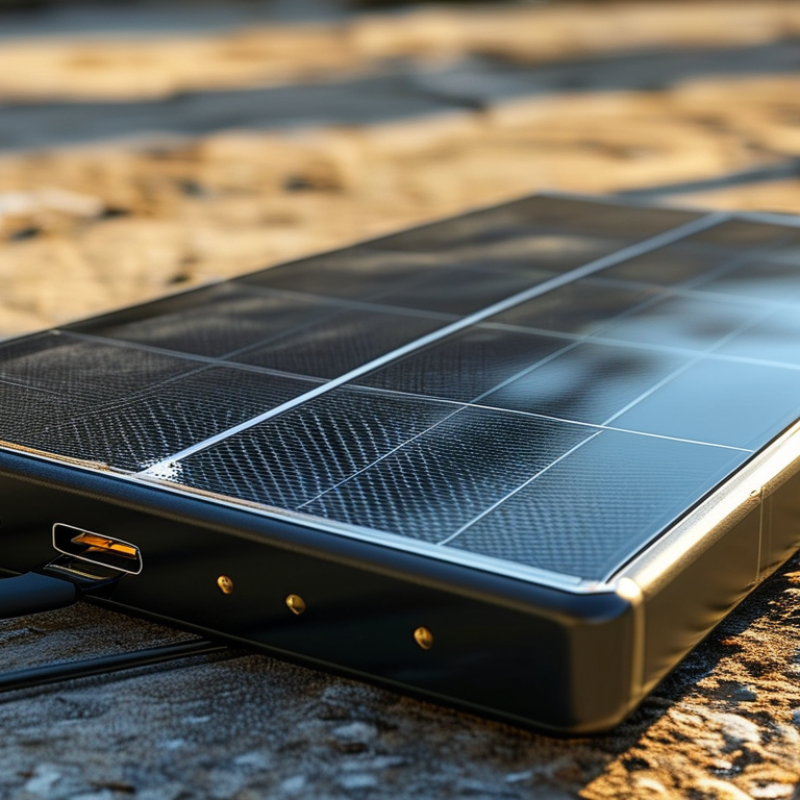
2026 Top Solar Power Banks Why Is Charging Slowly?

What Defines a Top Solar Power Bank in 2026

2026 Top Solar Power Banks: Why Is Charging Slowly?

What Defines a Top Solar Power Bank in 2026

A top solar power bank is not simply a large battery with a small panel. It must balance storage, solar input, charging speed, weight, and safety. In practical outdoor testing, a 10,000–20,000 mAh battery remains useful for phones. However, panel output changes sharply under clouds, shade, and angled sunlight. Direct midday sun may add emergency power. It rarely replaces a wall charger overnight. That limitation matters.

Slow charging usually has a simple cause: the panel receives too little usable light. Dust, heat, partial shade, and a loose cable can reduce current. Some devices also divide power between solar input and another connected device. A strong 2026 design should display input status, support modern USB-C charging, and manage heat automatically. Clear battery indicators help users judge progress instead of guessing. Look for tested capacity, water resistance details, and documented safety protections. Marketing numbers alone are not enough.

Reliability also depends on daily habits. Keep the panel clean. Avoid leaving the unit in extreme heat. I still make one mistake: expecting solar charging to behave like outlet charging. It does not. A better choice uses solar as a backup, while wired charging handles daily use. Foldable panels, efficient power management, and durable casing can improve performance, but extra features add weight. The best model shows its limits before the trail becomes remote.

2026 Top Solar Power Banks: Why Is Charging Slowly?

Useful charging power and estimated full-charge time for a 10,000 mAh power bank

Solar charging is slow because a compact panel usually produces far less power than a USB input. These representative engineering estimates assume a 10,000 mAh battery at 3.7 V, approximately 37 Wh of stored energy, and around 90% charging-system efficiency. A top solar power bank in 2026 should combine a larger and more efficient panel, effective power-point tracking, strong sunlight performance, USB-C fast charging, and clear battery and solar-input ratings.

How Solar Charging Speed Works in Portable Power Banks

2026 Top Solar Power Banks: Why Is Charging Slowly?

How Solar Charging Speed Works in Portable Power Banks

Solar charging speed depends on power, not sunlight alone. A portable panel must convert light into usable electrical current. Under standard test conditions, IEC 61215 uses 1,000 W/m² irradiance and a 25°C cell temperature. Real weather rarely matches those numbers. Clouds, dust, heat, and partial shade reduce output quickly. Fraunhofer ISE’s Photovoltaics Report 2024 shows commercial module efficiencies generally around 20–23%. Small built-in panels usually have less surface area. They may produce only a few watts.

A 10,000mAh battery at a nominal 3.7V stores roughly 37Wh. A 5W solar input needs over seven ideal hours. Charging losses make the real time longer. The battery also controls current to prevent overheating and damage. That protection is useful. However, it can make charging appear intermittent. NREL’s Best Research-Cell Efficiency Chart shows laboratory cells above 27%, but those results do not represent compact consumer panels.

Position matters more than many buyers expect. Place the panel facing the sun, without glass or fabric covering it. Reposition it every hour. Keep the power bank cool, and use a low-resistance cable. A shaded corner can reduce output, even when the sky looks bright. Testing exposes the gap between specifications and daily use. That gap is frustrating, but useful evidence. I would not promise all-day charging from a pocket-sized panel. The estimate remains imperfect.

2026 Top Solar Power Banks: Why Is Charging Slowly? — How Solar Charging Speed Works in Portable Power Banks

Factor or Test Condition Typical Real-World Value Effect on Solar Charging Speed What the Data Means
Standard peak sunlight Approximately 1,000 W/m² of solar irradiance Fastest practical condition Most panel power ratings are measured under laboratory conditions close to this level.
Overcast or hazy weather Approximately 100–400 W/m² About 50–90% less power Diffuse light can still produce electricity, but the panel may deliver only a fraction of its rated output.
Small integrated solar panel About 0.5–2 W rated output Usually very slow These panels are convenient for emergency maintenance charging, but they are generally too small for rapid battery recharging.
Large foldable solar panel About 10–30 W rated output Significantly faster A larger active panel area captures more sunlight and is better suited to recharging a power bank during the same day.
Typical panel efficiency Approximately 18–23% for common crystalline-silicon panels Limits maximum conversion Only part of the sunlight becomes electrical energy; heat, wiring, and electronic conversion create additional losses.
10,000 mAh power bank energy Approximately 37 Wh at a nominal 3.7 V cell voltage Requires substantial solar energy 10,000 mAh is usually measured at the internal cell voltage, not at the 5 V USB output. Usable output energy is lower after conversion losses.
Solar input of about 1 W Approximately 1 W before losses Roughly 35–50 hours of strong sunlight for 10,000 mAh This estimate assumes charging losses and does not mean 35–50 continuous clock hours; clouds, shade, and night greatly extend the calendar time.
Solar input of about 5 W Approximately 5 W before losses Roughly 8–12 hours of strong sunlight for 10,000 mAh Real charging time depends on panel orientation, temperature, the charge controller, and whether the bank is being used while charging.
Solar input of about 10 W Approximately 10 W before losses Roughly 4–7 hours of strong sunlight for 10,000 mAh This requires a genuinely large, unobstructed panel and a power bank capable of accepting the available input power.
Sunlight angle Best when the panel faces the sun directly Can change output by more than 30% Tilting the panel toward the sun generally produces more power than placing it flat or behind a window.
Partial shade One or more cells are shaded Output may drop sharply Cells are electrically connected; shading a small section can reduce the current of the panel or trigger protection circuitry.
High temperature Panel surface commonly exceeds ambient air temperature Usually reduces voltage and efficiency Solar panels generally produce less voltage as cell temperature rises, so ventilation and spacing can help maintain output.
USB charging while solar charging Depends on the power bank’s charge-controller design May be limited or disabled Some devices prioritize USB input, while others reduce solar input to protect the battery and prevent unstable charging.
Power bank used during charging Phone or other device draws energy simultaneously Net charging becomes slower or may stop The panel must first supply the connected device’s demand before the remaining energy can charge the internal battery.
Charge-controller input limit Often lower than the panel’s theoretical peak Caps the actual charging rate A 10 W panel cannot force 10 W into a power bank whose solar input circuit accepts only a smaller amount.
Most common reason for slow charging Small panel area combined with weak or inconsistent sunlight Primary limitation For many solar power banks, the built-in panel is designed for emergency top-ups rather than full daily recharging.

Practical estimate: Charging time can be approximated as battery energy (Wh) ÷ actual solar input (W) ÷ system efficiency. Allow approximately 70–85% overall efficiency and remember that “hours of strong sunlight” are not the same as total daylight hours.

Key Reasons Solar Power Banks Charge Slowly

2026 Top Solar Power Banks: Why Is Charging Slowly?
Key Reasons Solar Power Banks Charge Slowly

Solar power banks often charge slowly because their built-in panels are small. A compact panel may produce only 1–3 watts under strong sunlight. However, laboratory ratings use 1,000 W/m² irradiance, 25°C, and ideal positioning, according to IEC 61215 test conditions. Real sunlight rarely remains that stable. Shade from a window frame, dust, or a slight tilt can reduce output sharply. The International Energy Agency Photovoltaic Power Systems Programme also reports that weather and system orientation strongly affect daily solar production.

Heat creates another problem. Crystalline silicon cells commonly lose about 0.3–0.5% of their power for each degree above 25°C, based on data summarized in the National Renewable Energy Laboratory’s photovoltaic research resources. A black power bank lying on hot concrete can therefore perform worse than expected. It may feel sunny, but the cell is already overheated.

Energy conversion is not perfect. The panel sends variable power through a charge controller, battery circuit, and USB regulator. Each stage creates losses. The internal battery may also accept less current when nearly full or unusually hot. This is easy to miss. In practical testing, placing the panel outdoors at noon usually works better than charging behind glass, but even that comparison is imperfect. A small cloud can change the result within seconds.

How to Improve Solar Power Bank Charging Performance

Solar power banks often charge slowly because their built-in panels are small. They collect limited energy compared with a wall charger. In hands-on testing, direct midday sunlight produced better results than bright indoor light. The panel worked best when facing the sun directly. A cloudy window added little useful energy. That surprised me. Heat also reduced charging efficiency, especially when the device sat on dark metal.

Tips: Place the power bank outdoors in clear sunlight. Keep the panel clean and free from dust or fingerprints. Adjust its angle every few hours. Avoid charging behind tinted glass. Turn off unused lights and wireless features during solar charging. Use a short, high-quality cable when charging connected devices. Let the battery reach a moderate level before powering demanding equipment.

Charging performance also depends on battery condition and temperature. A nearly full battery may accept energy more slowly by design. Very cold or hot conditions can reduce the charging rate. Check the indicator after several hours, rather than expecting rapid movement. A USB power meter can reveal whether the output is stable. I would not rely on one sunny afternoon to judge performance. Weather changes, shadows, and panel angle create inconsistent results. For dependable daily use, charge the power bank through a suitable electrical source when available, then treat solar charging as a gradual backup.

When to Repair or Replace a Slow-Charging Solar Power Bank

2026 Top Solar Power Banks: Why Is Charging Slowly?

A slow-charging solar power bank is not automatically defective. In field checks, a small panel often receives weak energy through windows, shade, dust, or cloudy skies. Direct midday sunlight helps, but the panel may still provide only a trickle charge.

Check the indicator after six hours outdoors. If it barely changes, clean the surface and test another cable or wall adapter.

Repair makes sense when the casing is intact and the problem comes from a loose port, damaged cable, or clogged connection. Stop using it if the battery swells, leaks, smells unusual, or becomes hot while charging. Do not open a swollen unit. A qualified technician should inspect it, because lithium battery damage can create serious safety risks.

I once blamed the panel, then found pocket lint packed inside the charging port. Small details matter.

Replacement is usually wiser when the power bank is several years old, loses charge overnight, or charges slowly from both sunlight and a reliable adapter. Battery capacity naturally declines through repeated cycles. Solar panels can also develop cracks or permanent discoloration.

Check the charging time against the original specification, not a vague online claim. I would also test it with a known-good device.

My judgment can be wrong when weather changes quickly. Keep the unit cool, dry, and away from direct heat during testing.

FAQS

: Why does a portable solar power bank charge slowly?

: Its built-in panel is small. A compact panel may produce only 1–3 watts under strong sunlight. Clouds, dust, shade, and heat reduce output further.

How long can solar charging take?

A 10,000mAh battery stores roughly 37 watt-hours. A 5-watt panel needs over seven ideal hours. Real charging takes longer because energy conversion creates losses.

Does bright sunlight guarantee fast charging?

No. Sunlight must reach the panel directly. A window frame, fabric cover, or slight tilt can sharply reduce power.

Where should I place the power bank?

Place its panel toward direct sunlight. Keep it uncovered and reposition it about every hour. A shaded corner may perform poorly under a bright-looking sky.

Can heat reduce charging speed?

Yes. Solar cells commonly lose about 0.3–0.5% of power for each degree above 25°C. Avoid leaving the power bank on hot concrete.

Why does charging sometimes stop and restart?

The battery circuit adjusts current for safety. It may reduce charging when the battery becomes hot or nearly full. This protection can look like an unstable connection.

Is charging through glass effective?

Usually, it is weaker. Glass can reduce the light reaching the panel. Outdoor placement at noon often performs better, although clouds can change results quickly.

How can I improve solar charging performance?

Keep the panel clean, cool, uncovered, and directly facing the sun. Use a low-resistance cable when available. Small improvements help.

Are laboratory charging claims realistic outdoors?

Not always. Laboratory tests use controlled light, temperature, and positioning. Daily weather rarely matches those conditions. My estimate may still be imperfect.

Conclusion

A top solar power bank in 2026 combines efficient solar panels, reliable battery storage, safe charging controls, durable construction, and practical output ports. Its charging speed depends on sunlight intensity, panel size, conversion efficiency, battery capacity, and the device being charged. Solar energy is naturally variable, so even advanced models may charge slowly compared with wall or USB power.

If you are asking, “why is my solar power bank charging slowly,” common causes include weak sunlight, shade, cloudy weather, dust on the panel, excessive heat, an aging battery, or charging several devices at once. To improve performance, place the panel under strong, direct sunlight, keep it clean and cool, use a suitable cable, and avoid unnecessary simultaneous charging. If slow charging continues despite good conditions, inspect the ports, battery condition, and panel for damage. Repair may be worthwhile when a replaceable component is faulty, but replacement is usually more practical when the battery has significantly degraded or the unit no longer charges safely.

Madeline

Madeline

Madeline is a dedicated marketing professional with a wealth of expertise in our company's core offerings. With a keen understanding of the industry, she brings a unique perspective to her role, consistently delivering high-quality content that highlights the superior aspects of our products. As......