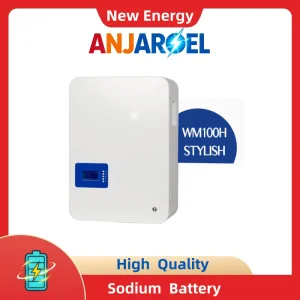
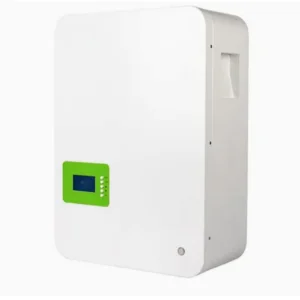
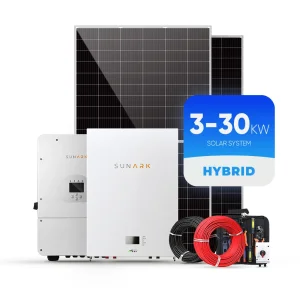
Premium energy storage solutions engineered for resilience, efficiency, and continuous power dispatching.
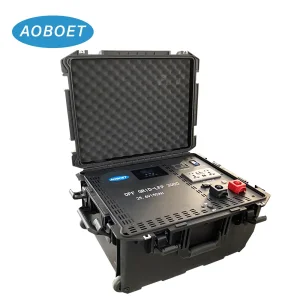
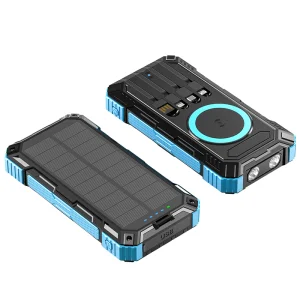
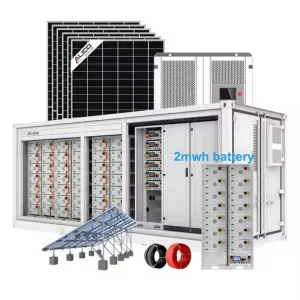
The global transition towards zero-carbon grids has catalyzed a paradigm shift in decentralization. No longer just a utility-scale mechanism, energy storage is micro-sized, highly integrated, and rapidly deployed at points of consumption. Commercial & Industrial (C&I) sectors, municipal infrastructures, and residential high-density markets are driving the demand for smart Outdoor Energy Systems.
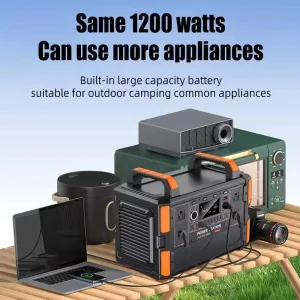
These units function as localized dispatch centers, stabilizing solar generation intermittency, maximizing peak-shaving efficiencies, and supplying emergency backup power. With grid fragility escalating under extreme weather fluctuations and aging distribution grids, modern businesses demand modular, drop-in energy infrastructure. Plug-and-play energy storage containment units and residential solar energy setups are the structural pillars safeguarding business continuity and residential power security.
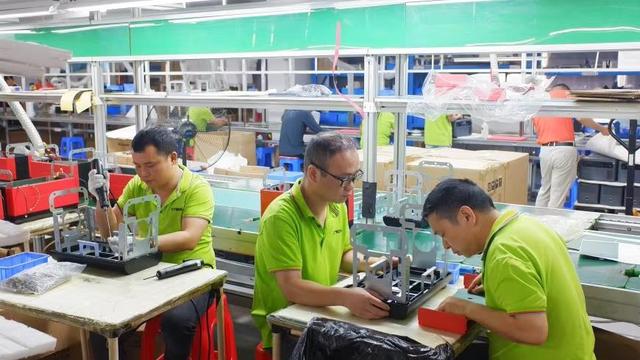
Procuring battery energy storage systems (BESS) and portable solar generators for international utility or distribution pipelines requires navigating a complex matrix of engineering, compliance, and life-cycle costs. Global corporate buyers focus on five primary technical criteria when sourcing from manufacturing plants in China:
B2B developers require advanced LFP (LiFePO4) or Sodium-Ion configurations paired with smart Battery Management Systems (BMS) to actively mitigate thermal runaway events and maximize system life spans.
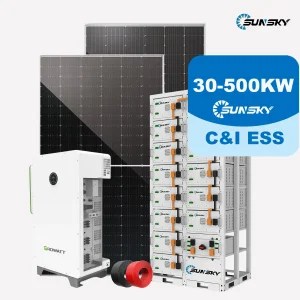
Systems must support flexible parallel operations. From balcony solutions to commercial setups up to 500kW BESS container containers, scalable design controls development costs.
International imports require certifications like CE, RoHS, UN38.3, and compliance with local grid codes (such as EN50549 for European balcony configurations).
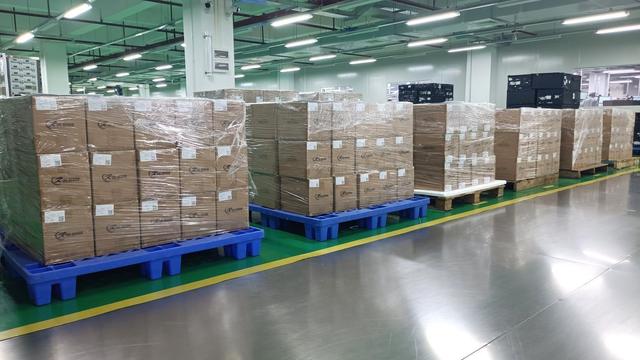
Operating from Shenzhen, the global hub of electronic supply chain innovation, China's factory integration offers significant advantages for renewable energy manufacturing. Industry 4.0 processes allow manufacturers to maintain consistent quality control from single cell grading to complete container testing.
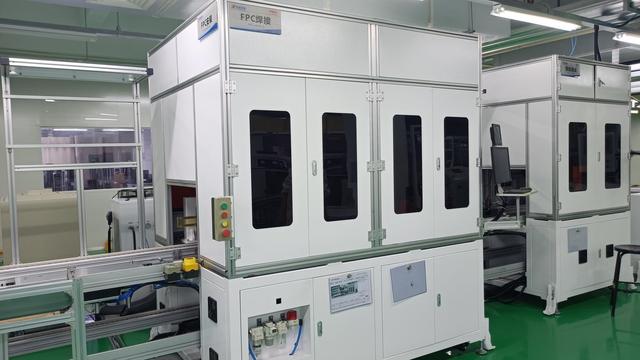
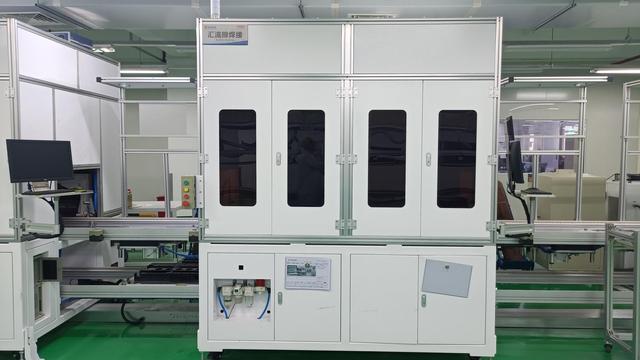
By automating the cell grouping, sorting, and laser-welding processes, we reduce resistance variance in battery packs. This direct manufacturing control ensures each system performs reliably throughout its operating life. Integrated supply chains allow us to rapidly source raw materials and manufacture customized, project-specific systems at highly competitive rates.
Modern power challenges require specialized solutions. Outdoor energy storage configurations are engineered for distinct deployment environments:
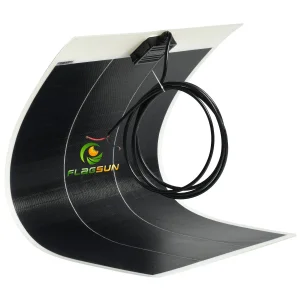
Increasing utility rates have turned high-rise balconies into active power generators. Integrated kits combine lightweight panels with micro-inverters to easily feedback power into household grids, lowering base utility costs.
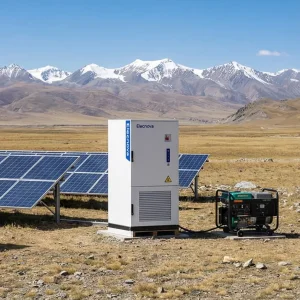
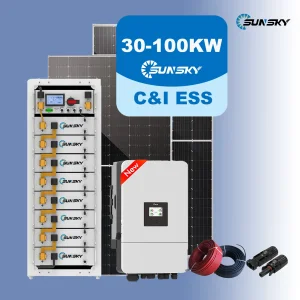
Agricultural operations, construction fields, and remote sites depend on robust containerized systems. Utilizing hybrid inverters, these units manage power from solar, wind, and generator backups to keep sites operational.
Residential setups supply clean, automatic power during grid outages, securing critical home appliances and keeping communications systems running during emergencies.
Shenzhen PlugVolt Charging Co., Ltd. is a professional manufacturer and global supplier specializing in home energy storage battery systems and residential solar storage solutions. The company focuses on the research, development, production, and integration of advanced lithium battery technologies designed for modern energy management, backup power, and renewable solar applications.
With a strong commitment to innovation and sustainability, PlugVolt Charging delivers high-performance energy storage systems that support residential solar setups, balcony solar systems, and off-grid power solutions. Its product portfolio includes modular battery storage units, intelligent battery management systems (BMS), hybrid inverter-compatible storage solutions, and emergency backup power systems designed for reliable and efficient energy utilization.
Shenzhen PlugVolt Charging Co., Ltd. emphasizes safety, stability, and long service life. All systems are manufactured under strict quality control standards and comply with international certifications such as CE, UN38.3, and ISO requirements. The company ensures that every energy storage solution offers high energy density, fast charging capability, and intelligent power optimization.
In addition to standard products, PlugVolt provides OEM and ODM customization services to meet diverse project requirements for residential, commercial, and small-scale industrial energy storage applications. Its solutions are widely used in Europe, Asia, Africa, and the Americas, supporting the global transition toward clean and renewable energy.
By combining advanced battery technology with smart energy management systems, Shenzhen PlugVolt Charging Co., Ltd. is committed to becoming a trusted global partner in residential energy storage and solar backup power solutions, empowering users with safer, greener, and more efficient electricity independence.
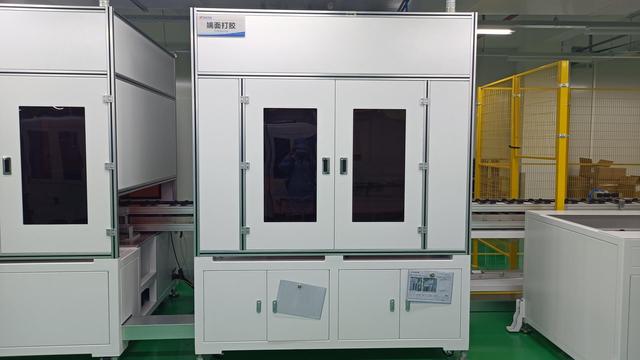
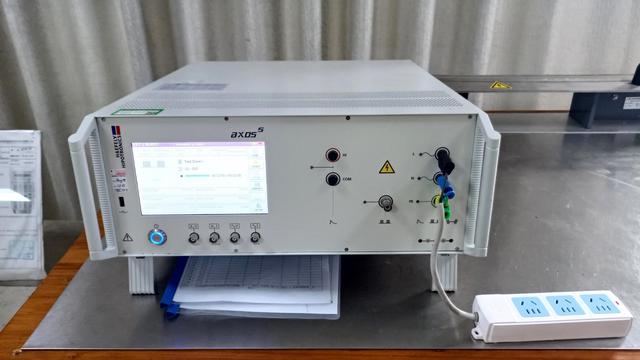
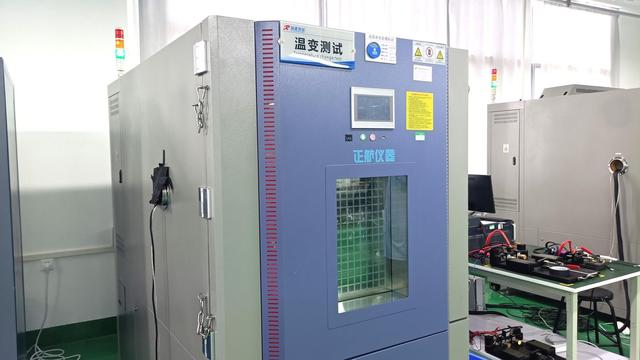
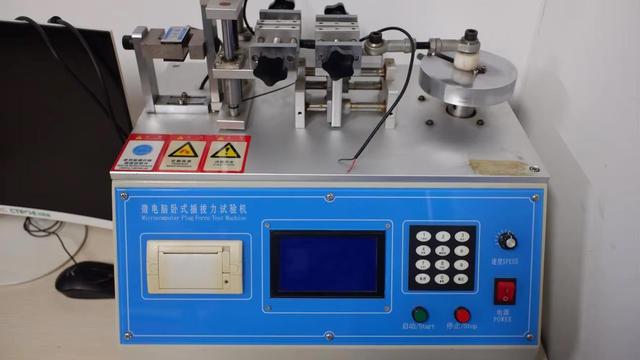
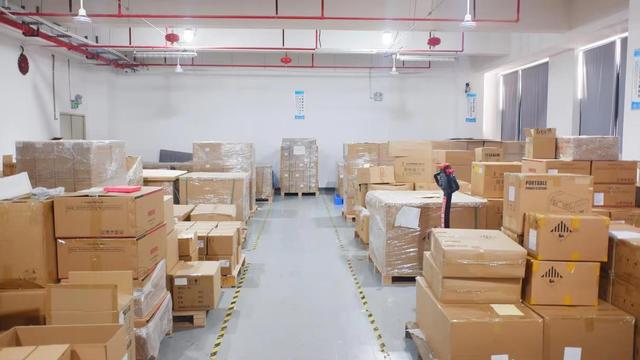
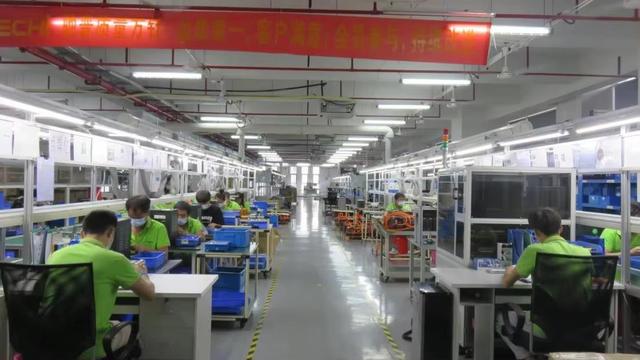
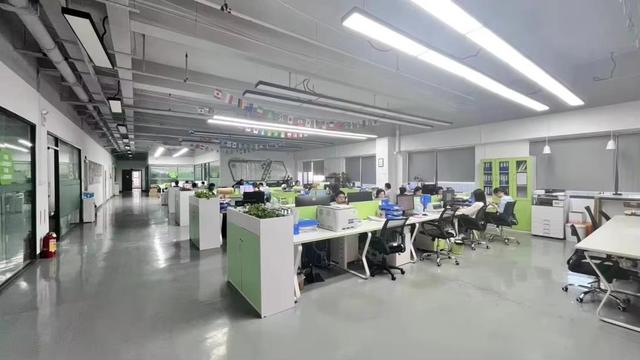
A transparent view into our production lines, raw material quality inspections, testing chambers, and dispatch bays.
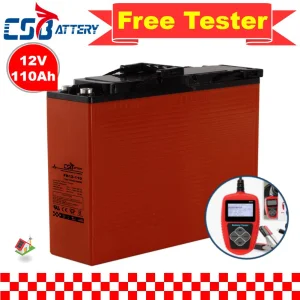
LiFePO4 (Lithium Iron Phosphate) remains the industry benchmark for home energy systems due to its exceptional energy density, long cycle life (often exceeding 6,000 cycles at 80% DOD), and superior thermal stability. Sodium-ion is an emerging alternative that performs well in extreme low-temperature conditions (down to -30°C) and offers a cost-effective choice because sodium raw materials are highly abundant.
A smart Battery Management System (BMS) monitors cell metrics like voltage, temperature, and current in real time. It protects the system from overcharging, deep discharging, short circuits, and thermal runaways. By balancing the charge across individual cells, a quality BMS extends the battery pack's overall life span and maintains stable power output.
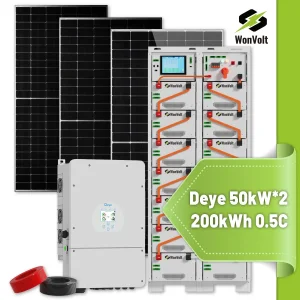
Yes. Systems such as our Deye 100kW energy storage solution are designed to support three-phase grid configurations. This allows commercial and industrial users to balance power loads across all three phases, enabling smooth integration with high-voltage machinery and industrial-grade solar arrays.
European imports must comply with CE marking requirements, the RoHS directive, and the REACH regulation. The battery packs require UN38.3 certification for transport safety. Grid-connected setups like balcony kits must also meet specific regional grid connection codes, such as Germany's VDE-AR-N 4105 standard.
A hybrid Battery Energy Storage System (BESS) container uses an integrated hybrid inverter system to coordinate power. It prioritizes clean solar inputs, stores surplus power in the battery system, and switches to backup generators or the grid when battery levels fall below set limits. This automated balancing provides consistent power supply for remote or industrial operations.
We provide full customization, including changes to battery capacity (kWh), inverter output ratings, exterior enclosure sizing, custom branding, and BMS communication protocols (such as CAN, RS485, or Modbus). This allows buyers to adapt systems to their local market and technical requirements.
Our outdoor systems use robust active thermal management, featuring liquid cooling or smart fan-assisted air cooling. These systems monitor cabinet temperatures and adjust cooling dynamically to keep battery cells operating within their safe thermal range, preventing heat buildup and maintaining system life.
With our premium LiFePO4 cells and smart BMS management, systems are rated for over 10 to 15 years of daily cycling. The batteries will generally maintain over 80% of their original capacity after 6,000 cycles, providing long-term value for home and business installations.
Explore our complete range of high-efficiency battery packs, custom portable generators, and industrial energy solutions.
 PlugVolt Charging